Vasculitis is a serious autoimmune condition that …


Vasculitis is a serious autoimmune condition that …
Systemic Lupus Erythematosus (SLE), commonly known…
a chronic autoimmune disease that mainly affects t…
a chronic inflammatory disease that primarily affe…
Fibromyalgia is a common but often misunderstood c…
Gout is a common type of inflammatory arthritis th…
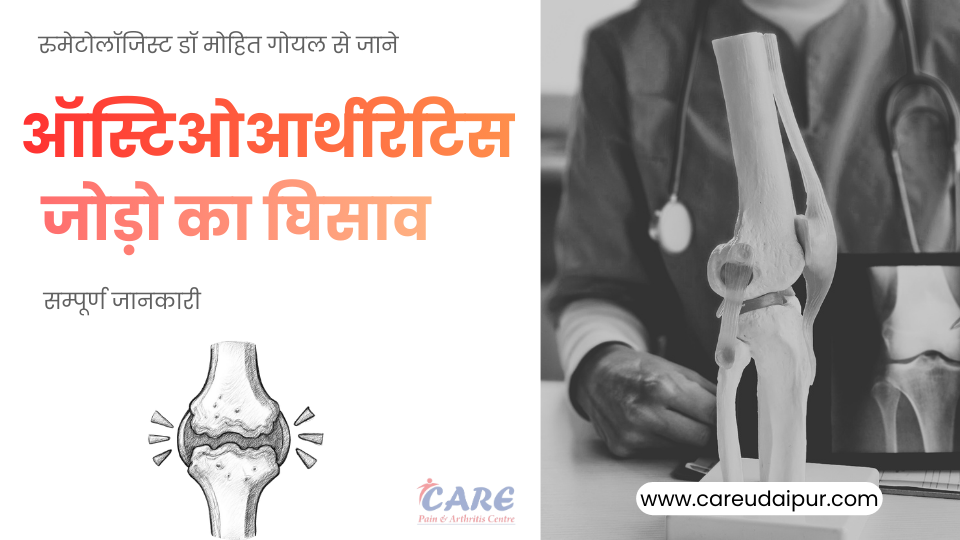
Osteoarthritis occurs when the protective cartilag…
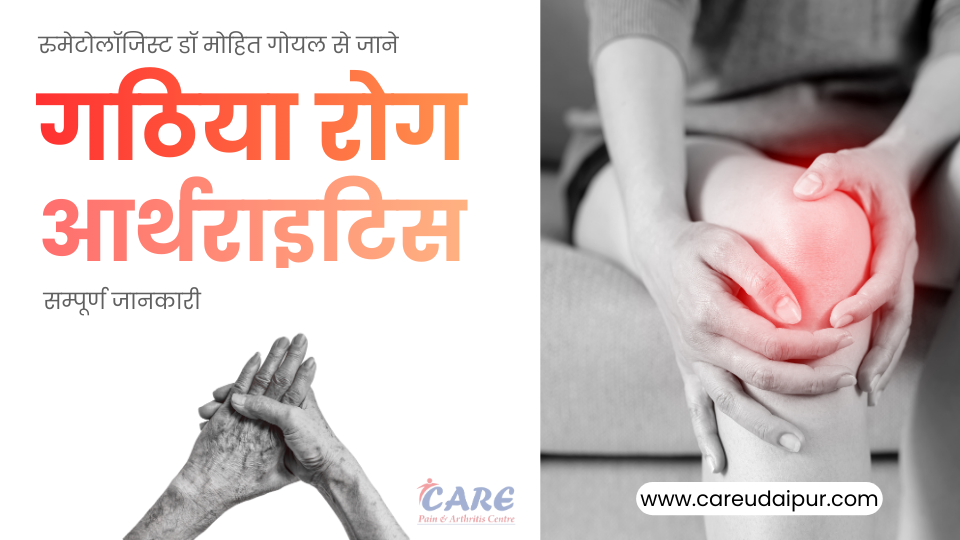
Rheumatoid Arthritis (RA) is a chronic autoimmune …
Psoriatic Arthritis is a chronic autoimmune condition that affects both the joints and the skin. It commonly occurs in people who have psoriasis, a skin disease that causes red, scaly patches on the skin. In psoriatic arthritis, the immune system attacks healthy joints, leading to pain, swelling, stiffness, and reduced mobility.
The condition can affect different parts of the body including the fingers, toes, knees, spine, and lower back. In some patients, joint symptoms may appear before the skin symptoms of psoriasis. Without proper treatment, psoriatic arthritis can lead to joint damage and long-term disability.
Early diagnosis and specialized treatment are important to control inflammation and prevent joint damage. At Care Pain & Arthritis Centre in Udaipur, patients with psoriatic arthritis receive expert evaluation and treatment under the guidance of Dr. Mohit Goyal, Rheumatologist, who specializes in autoimmune and inflammatory joint diseases.
What is Psoriatic Arthritis?
Psoriatic arthritis is an autoimmune inflammatory arthritis associated with psoriasis. The immune system mistakenly attacks healthy tissues in the joints and skin, causing inflammation and swelling.
The disease can affect a single joint or multiple joints and may vary from mild to severe. If left untreated, psoriatic arthritis can damage joints permanently and affect daily activities.
Psoriatic arthritis is part of a group of diseases called spondyloarthritis, which also includes ankylosing spondylitis and other inflammatory joint conditions.
Common Symptoms of Psoriatic Arthritis
Symptoms may develop gradually or suddenly. Many patients experience flare-ups where symptoms worsen for a period of time.
Common symptoms include:
Some patients may also develop enthesitis, which is inflammation where tendons attach to bones.
If these symptoms persist, consulting a rheumatologist is important for proper diagnosis.
Causes and Risk Factors
The exact cause of psoriatic arthritis is not fully understood, but several factors can increase the risk.
Genetic Factors
Many patients with psoriatic arthritis have a family history of psoriasis or autoimmune diseases.
Immune System Dysfunction
The immune system mistakenly attacks healthy tissues in the joints and skin.
Environmental Triggers
Certain triggers may activate the disease in genetically predisposed individuals, including:
Both men and women can develop psoriatic arthritis, typically between the ages of 30 and 50.
Joints and Areas Affected
Psoriatic arthritis can affect multiple joints in the body.
Commonly affected areas include:
Fingers and Toes
Swelling of entire fingers or toes (dactylitis) is a characteristic sign of psoriatic arthritis.
Knees
Patients may experience knee swelling and pain during walking or movement.
Spine
Some individuals develop inflammation in the spine and lower back.
Entheses
Pain may occur where tendons attach to bones, such as the heel.
Early treatment helps prevent long-term joint damage.
Diagnosis of Psoriatic Arthritis
Diagnosing psoriatic arthritis requires evaluation by a rheumatologist because symptoms can resemble other forms of arthritis.
Medical History and Physical Examination
The doctor evaluates joint pain, skin lesions, and nail changes.
Blood Tests
Blood tests help rule out other types of arthritis and check inflammation markers.
Common tests include:
Imaging Tests
Imaging tests help identify joint inflammation and damage.
These may include:
At Care Pain & Arthritis Centre in Udaipur, Dr. Mohit Goyal uses comprehensive diagnostic evaluation to confirm psoriatic arthritis and determine the best treatment plan.
Treatment Options for Psoriatic Arthritis
Although psoriatic arthritis cannot be completely cured, modern treatments can effectively control inflammation and prevent joint damage.
Treatment plans are customized based on disease severity.
Medications
Common medications include:
These medications help slow disease progression and reduce joint damage.
Physiotherapy
Physiotherapy can improve joint flexibility and strength.
Benefits include:
Lifestyle Modifications
Healthy lifestyle habits can improve disease management.
Recommended practices include:
Complications of Untreated Psoriatic Arthritis
If psoriatic arthritis is not treated early, it may lead to serious complications.
Possible complications include:
Early diagnosis and treatment significantly reduce these risks.
Psoriatic Arthritis Treatment in Udaipur
Patients looking for psoriatic arthritis treatment in Udaipur can receive specialized care at Care Pain & Arthritis Centre.
Under the expertise of Dr. Mohit Goyal, Rheumatologist, the clinic provides:
The goal of treatment is to reduce inflammation, protect joints, and improve overall quality of life.
When Should You See a Rheumatologist?
You should consult a rheumatologist if you experience:
Early consultation allows doctors to start treatment before permanent joint damage occurs.
Expert Care at Care Pain & Arthritis Centre
Psoriatic arthritis requires specialized care and long-term disease management. With proper treatment and lifestyle support, many patients can lead active and healthy lives.
At Care Pain & Arthritis Centre in Udaipur, Dr. Mohit Goyal, an experienced Rheumatologist, provides comprehensive care for patients with psoriatic arthritis and other autoimmune joint diseases.
If you are experiencing symptoms of psoriasis along with joint pain or swelling, consulting a specialist rheumatologist can help ensure accurate diagnosis and effective treatment.
Your content goes here. Edit or remove this text inline or in the module Content settings. You can also style every aspect of this content in the module Design settings and even apply custom CSS to this text in the module Advanced settings.
0 Comments