Vasculitis is a serious autoimmune condition that …


Vasculitis is a serious autoimmune condition that …
Systemic Lupus Erythematosus (SLE), commonly known…
a chronic autoimmune disease that mainly affects t…
a chronic inflammatory disease that primarily affe…
Fibromyalgia is a common but often misunderstood c…
Gout is a common type of inflammatory arthritis th…
It commonly occurs in people who have psoriasis, a…
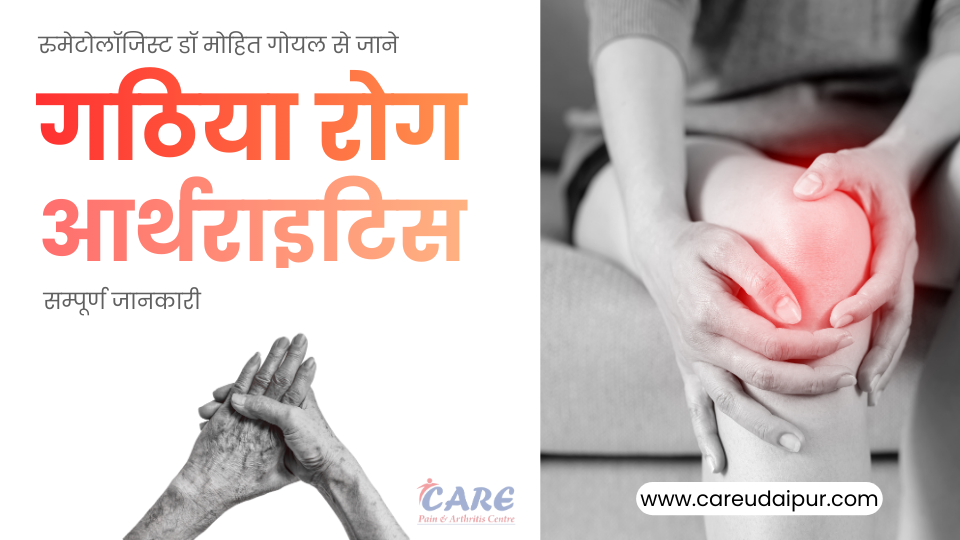
Rheumatoid Arthritis (RA) is a chronic autoimmune …
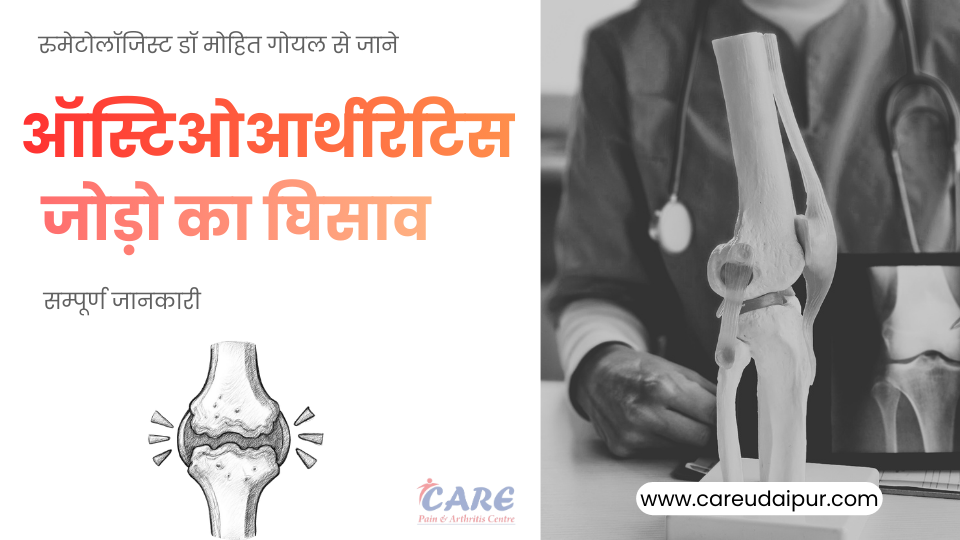
Osteoarthritis is the most common type of arthritis and a leading cause of joint pain and stiffness worldwide. It develops when the protective cartilage between bones gradually wears down, causing the bones to rub against each other.
This leads to pain, swelling, stiffness, and reduced movement in the affected joints.
Osteoarthritis most commonly affects the knees, hips, hands, and spine, but it can occur in any joint. While it is more common with aging, younger individuals can also develop it due to injuries, obesity, or repetitive stress on joints.
At Care Pain & Arthritis Centre, Udaipur, patients receive expert diagnosis and treatment under Dr. Mohit Goyal (Rheumatologist). With the right care, osteoarthritis symptoms can be effectively managed, helping patients maintain a better quality of life.
Osteoarthritis is a degenerative joint disease that occurs when cartilage breaks down over time.
Cartilage acts as a cushion between bones, allowing smooth joint movement. When this cushion becomes thin or damaged, joints become painful and stiff.
Over time, osteoarthritis may lead to:
Although osteoarthritis cannot be completely cured, modern treatments can control symptoms and slow progression.
Symptoms usually develop slowly and may worsen over time. Common signs include:
👉 Many people notice that pain increases after physical activity or prolonged standing/walking.
If symptoms persist for several weeks, it’s important to consult a rheumatologist.
Osteoarthritis is mainly caused by wear and tear of joints, but several factors increase the risk.
Cartilage naturally weakens with age, increasing the risk.
Past injuries, sports trauma, or repetitive stress can damage joints.
Extra weight puts pressure on knees and hips, accelerating cartilage damage.
Family history can increase susceptibility.
Repetitive movements in certain jobs or activities can lead to joint damage.
Osteoarthritis usually affects joints that are used frequently or bear weight:
👉 Early treatment can help prevent worsening and improve joint function.
Diagnosis involves a detailed evaluation by a rheumatologist.
Understanding lifestyle, symptoms, and past injuries helps confirm diagnosis.
At Care Pain & Arthritis Centre, Udaipur, advanced diagnostic methods ensure accurate assessment.
The main goal of treatment is to reduce pain, improve mobility, and maintain joint function.
Helps in:
While it may not always be preventable, you can slow its progression by:
👉 Early treatment is key to avoiding serious joint damage.
If you are looking for expert osteoarthritis care in Udaipur, visit:
Care Pain & Arthritis Centre
👨⚕️ Dr. Mohit Goyal – Rheumatologist
The clinic offers:
The focus is on helping patients reduce pain, improve mobility, and live actively.
Consult a specialist if you experience:
👉 Early consultation improves treatment outcomes and prevents complications.
Osteoarthritis can impact daily life, but with the right treatment and lifestyle changes, it is highly manageable.
✔ Early diagnosis
✔ Proper treatment
✔ Regular follow-up
These steps can help you stay active and pain-free.
At Care Pain & Arthritis Centre, Udaipur, expert care is available to guide you towards better joint health and improved quality of life.
Your content goes here. Edit or remove this text inline or in the module Content settings. You can also style every aspect of this content in the module Design settings and even apply custom CSS to this text in the module Advanced settings.
0 Comments